
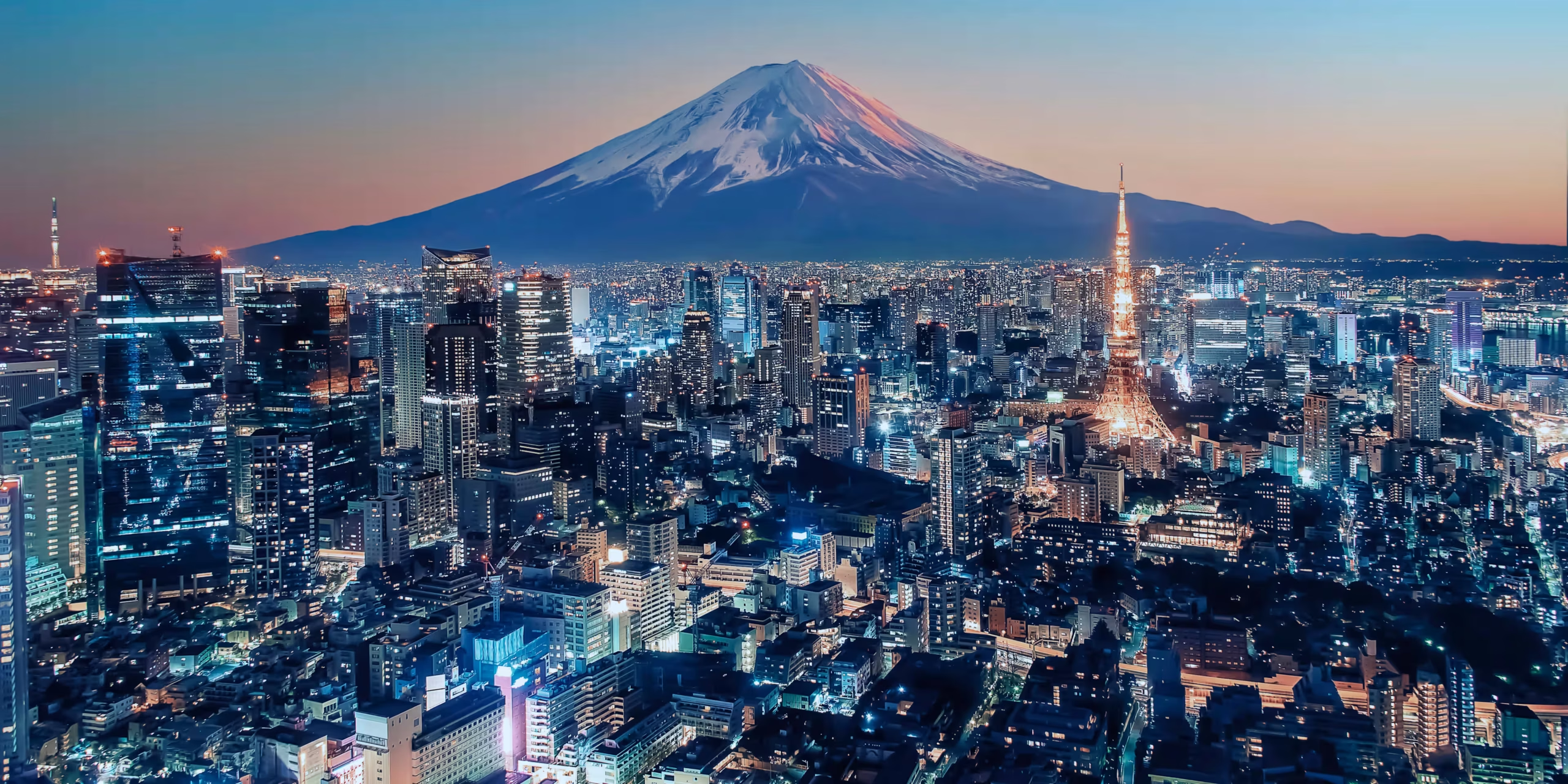
Tokyo is one of those cities that instantly captivates. With its unique culture, modernity, and powerful global image, it represents a dream destination for many.
But living in Tokyo — whether for a few weeks, several months, or long-term — is a very different experience from simply visiting.
It’s an environment that can be both inspiring and disorienting.

Contrary to what many believe, moving to Tokyo is not always the result of a perfectly planned strategy.
For some, Japan begins with:
Then, over time, opportunities emerge — professional or personal — eventually leading to a more permanent move.
👉 Expatriation is rarely linear. It evolves.
This is undoubtedly one of the most striking aspects.
Even in an international city like Tokyo:
👉 The result: a feeling of starting from scratch.
Having basic Japanese skills before arriving — even minimal — can make a huge difference.
Living in Tokyo means accepting a deep cultural shift.
For example:
Some people may feel a sense of distance, or even loneliness, especially in the first few weeks.
Tokyo is a megacity.
But unlike other major cities:
👉 This is often an underestimated aspect of life in Tokyo.
Certain situations can make expatriation even more difficult:
In these moments, the environment can feel overwhelming.
Moving abroad alone is possible. But doing so with a partner or a network makes adaptation significantly easier.
Having someone to share:
👉 makes all the difference in the early stages.
Professional life in Japan is built on very specific codes.
In the workplace:
Unlike the faster, more flexible Western approach, precision is prioritized here.
Work culture also relies on:
👉 Understanding these codes is essential for professional success.
It depends on your goals.
👉 For a short stay: not essential
👉 For long-term living: highly recommended
Being able to:
can help avoid a lot of frustration.
For those familiar with major European cities, the contrasts are significant.
👉 Tokyo is often seen as safer, but also more distant.
One of Tokyo’s greatest strengths is its diversity.
You’ll find:
Each visit can feel completely different depending on where you go.
For a first immersion, some places remain essential:
But beyond these highlights, there are also more discreet neighborhoods with a unique, local atmosphere.
Unlike other Asian destinations, street food is less present in public spaces.
However, there are typical alternatives:
👉 Food is an essential part of the experience.
Many visitors stay only in the capital.
That’s a mistake.
Japan takes on a whole new dimension when you explore:
Among the most memorable activities, some allow you to experience the country differently.
For example:
Accessible even for non-athletes, this type of journey offers:
Japan cannot be fully understood through travel alone.
To go deeper, it helps to:
👉 Japanese culture is subtle and takes time to grasp.
Adaptation depends greatly on the individual.
Some integrate quickly.
Others struggle more.
What makes the difference:
Build connections.
Whether with:
👉 A network is essential to:
Yes.
But it requires:
Tokyo is a demanding city, but full of opportunities for those willing to invest in it.
Tokyo is a fascinating city, but it doesn’t always match expectations.
And that’s exactly what makes it unique.
👉 The best advice:
Arrive without preconceived ideas, stay open-minded, and allow yourself to experience Japan as it truly is.

